Differentiating Blockchain Databases from Conventional Databases
This simulation demonstrates differentiating properties of blockchain such as Immutability, Decentralization, and Performance.
Immutability
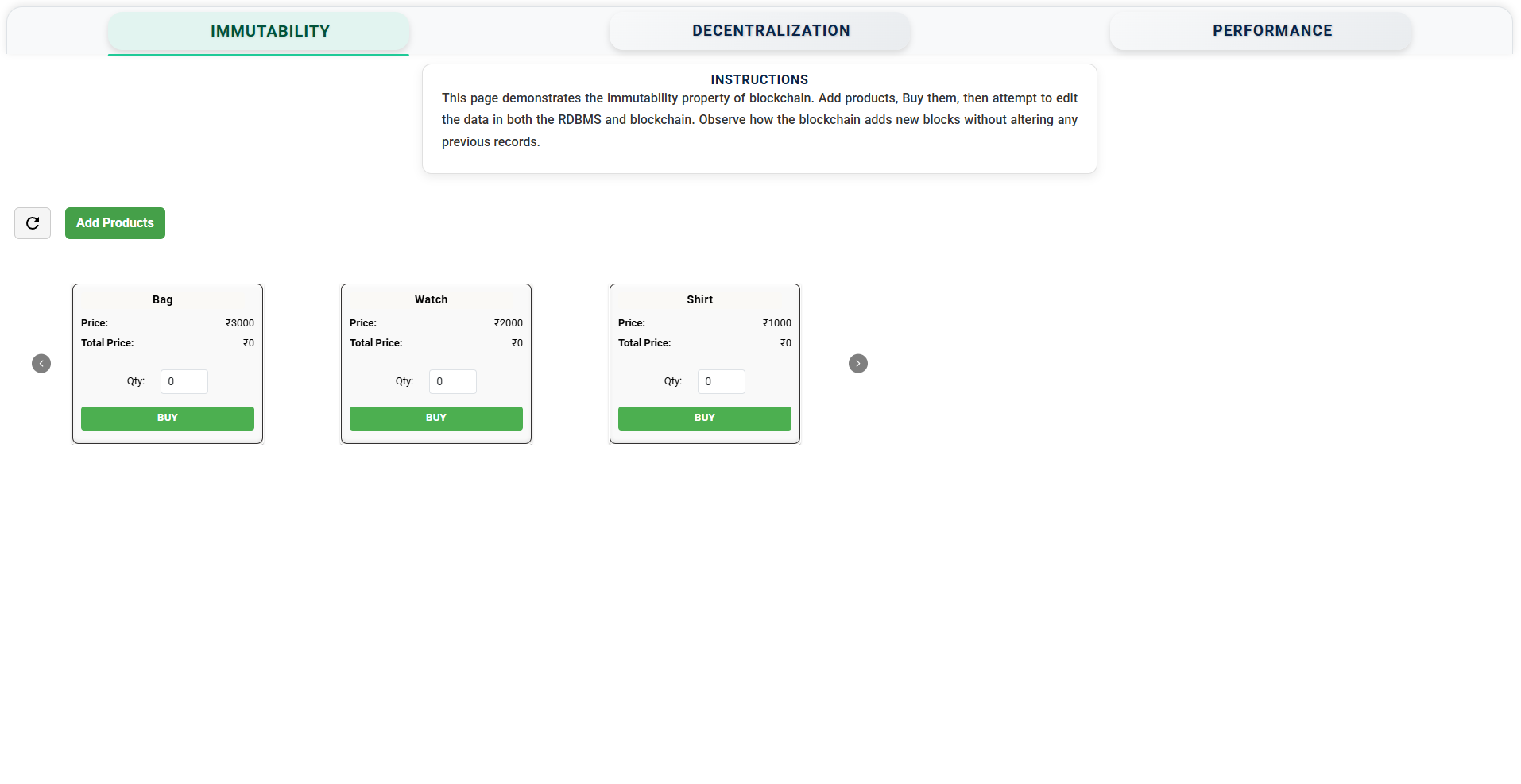
This page demonstrates the immutability of blockchain. Add products and click the BUY button to purchase them.
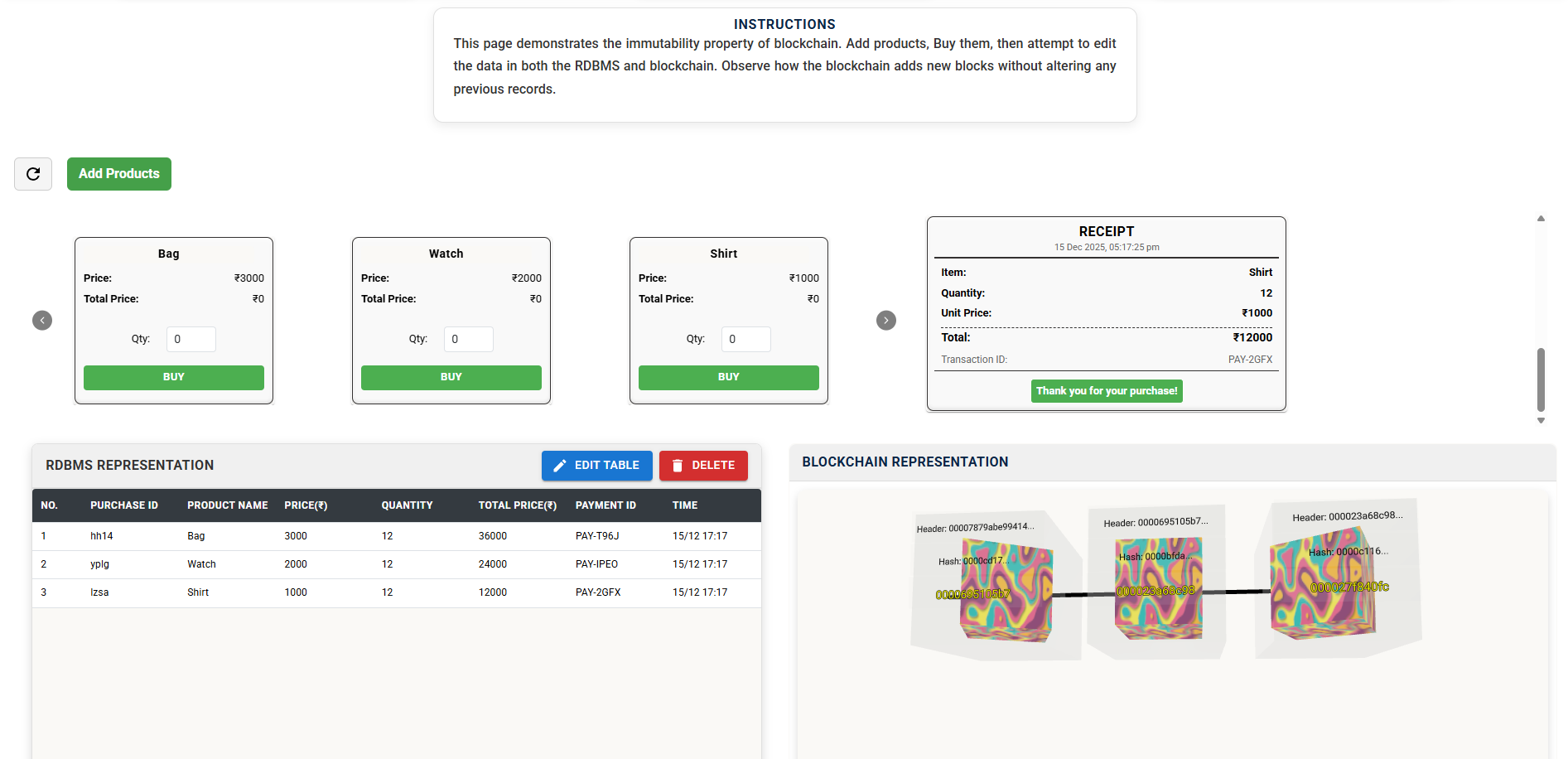
Click the EDIT TABLE button to modify the data in the RDBMS Representation Table.
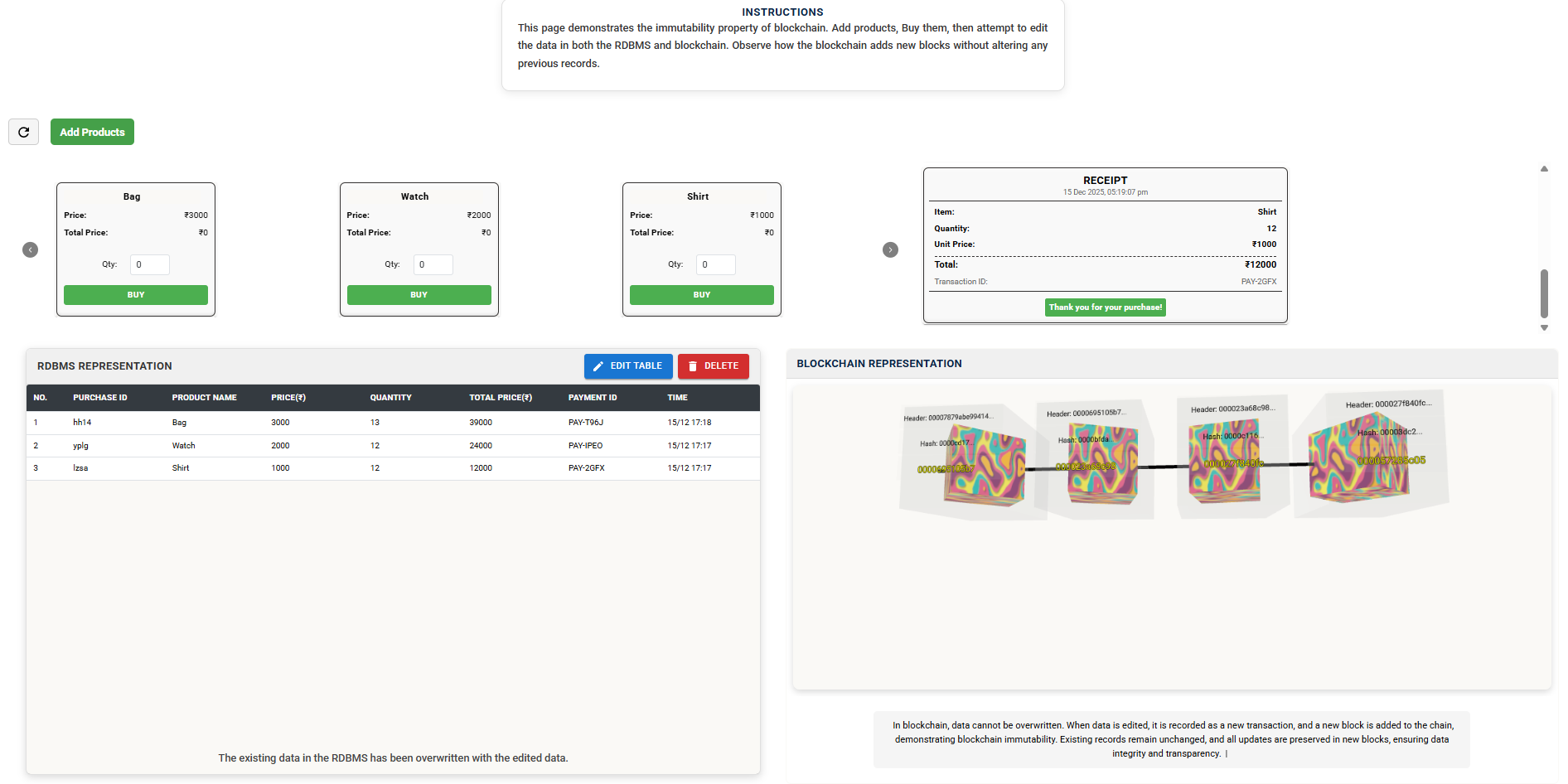
Once you have successfully edited the data in the RDBMS Representation Table, observe how the Blockchain Representation reflects these updates immutably, ensuring that any modification creates a new linked block rather than altering existing data.
Decentralization
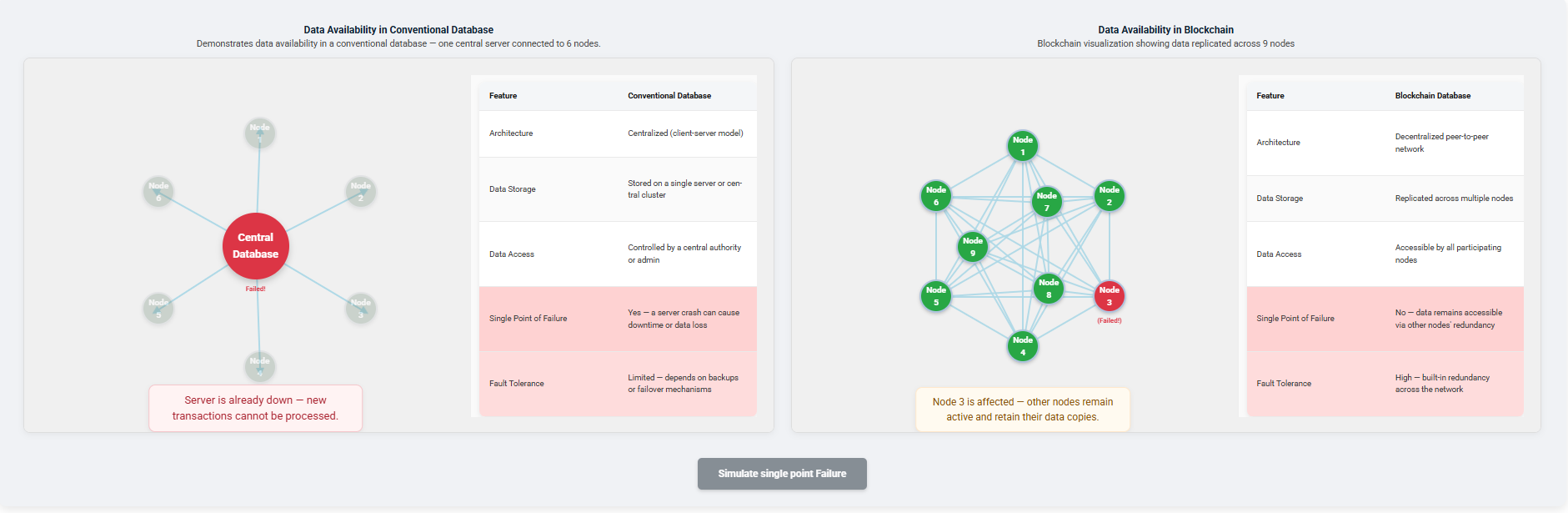
This page demonstrates the concept of decentralization in blockchain. To demonstrate data availability, create a transaction by clicking the BUY button.
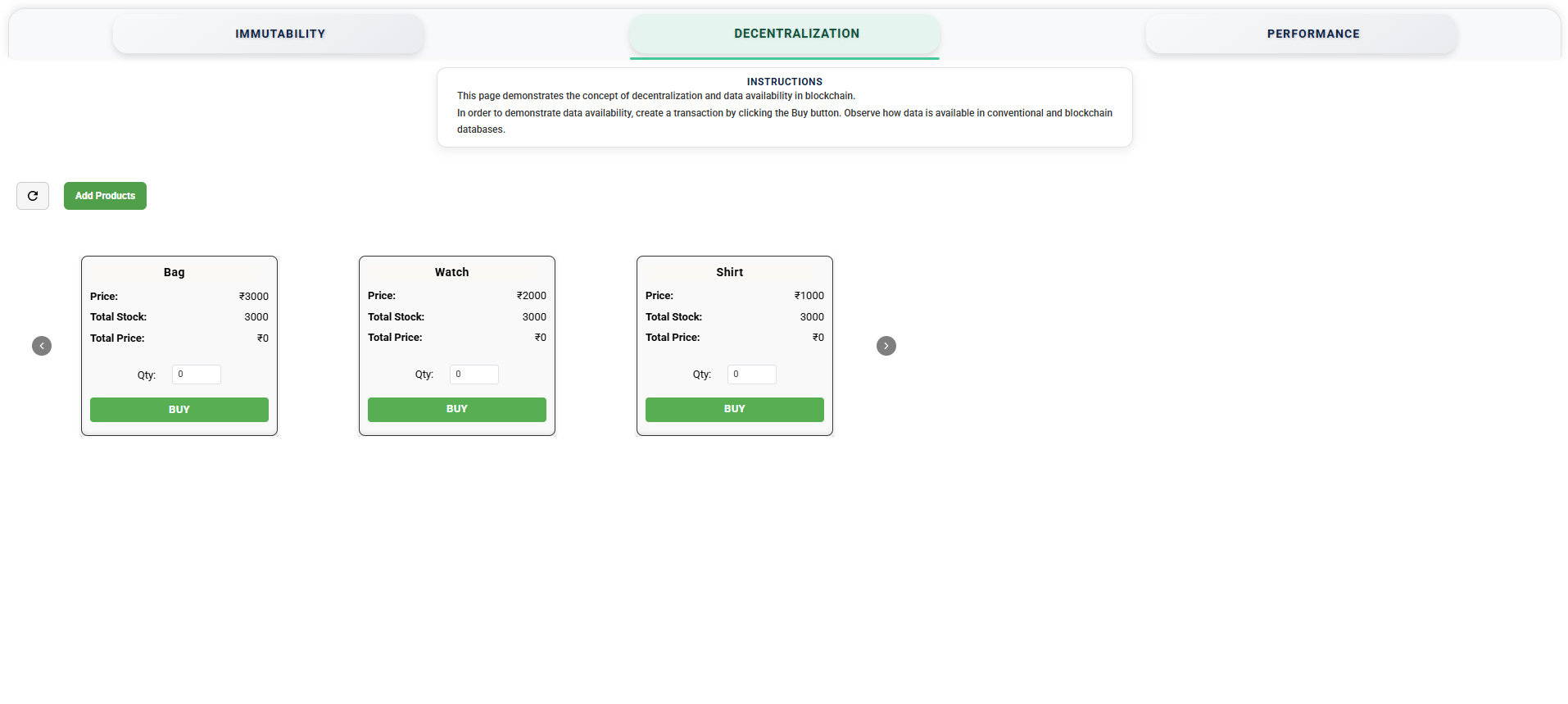
Observe how data is managed in the conventional and blockchain databases.
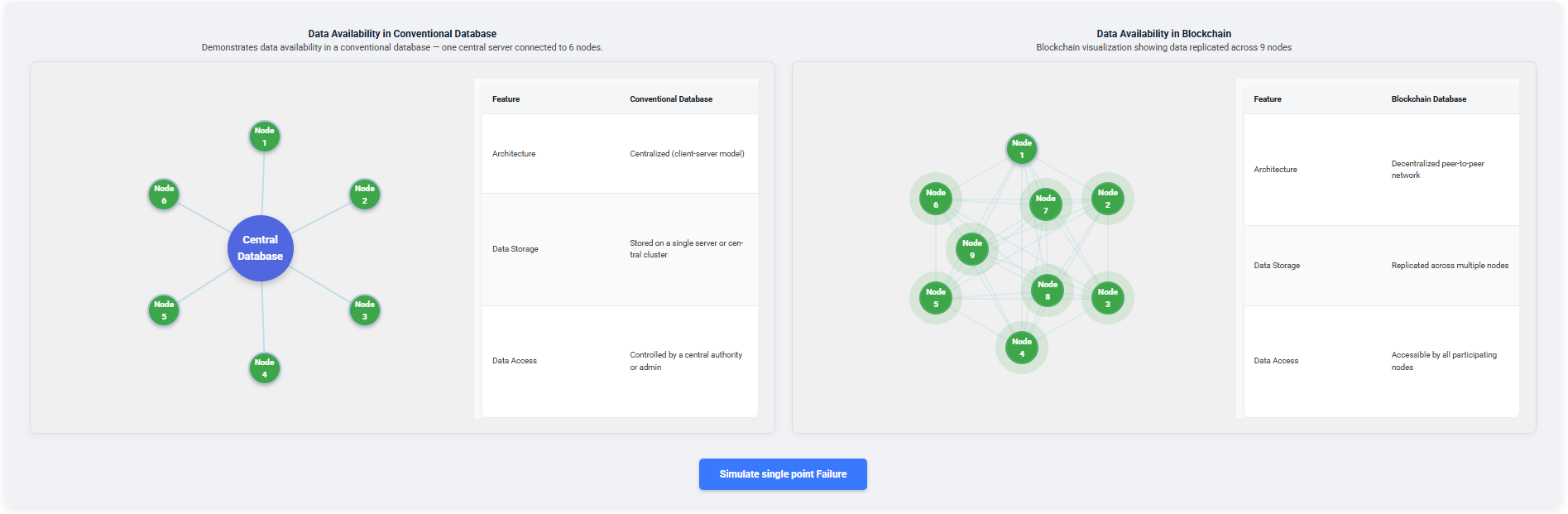
Click Simulate Single Point Failure to observe how a failure impacts the conventional and blockchain databases.
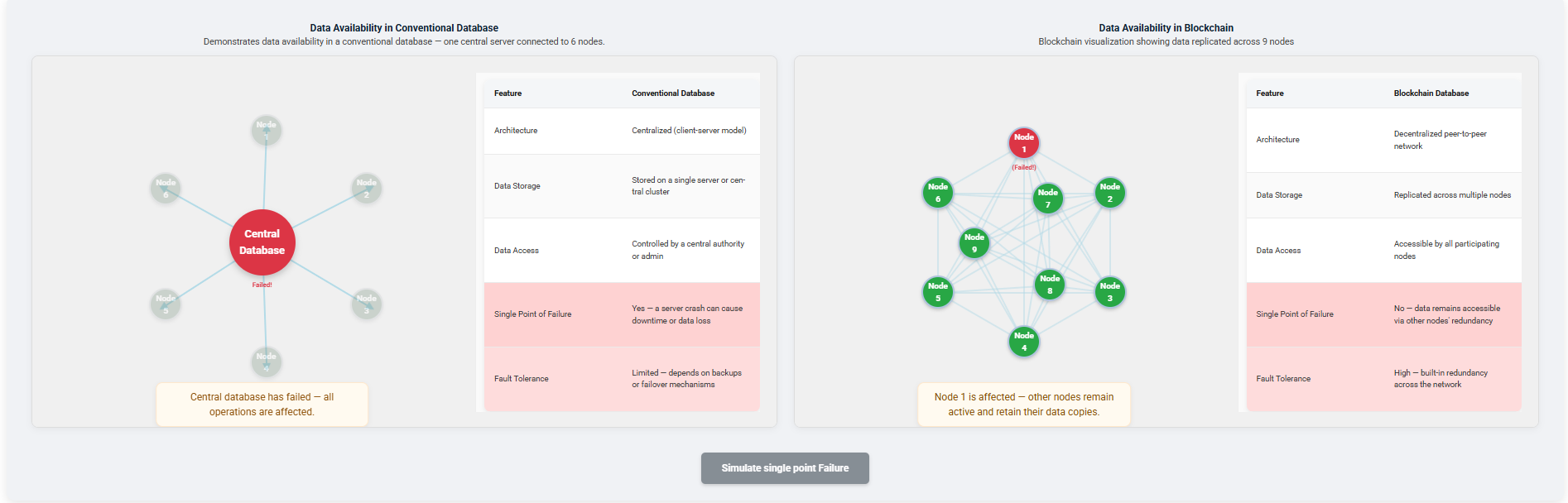
When the server fails, try to buy a new item. A message will appear stating: “The server is currently down. Choose an option to proceed.” You will be given two options: Fix and Continue or Continue Without Fix.
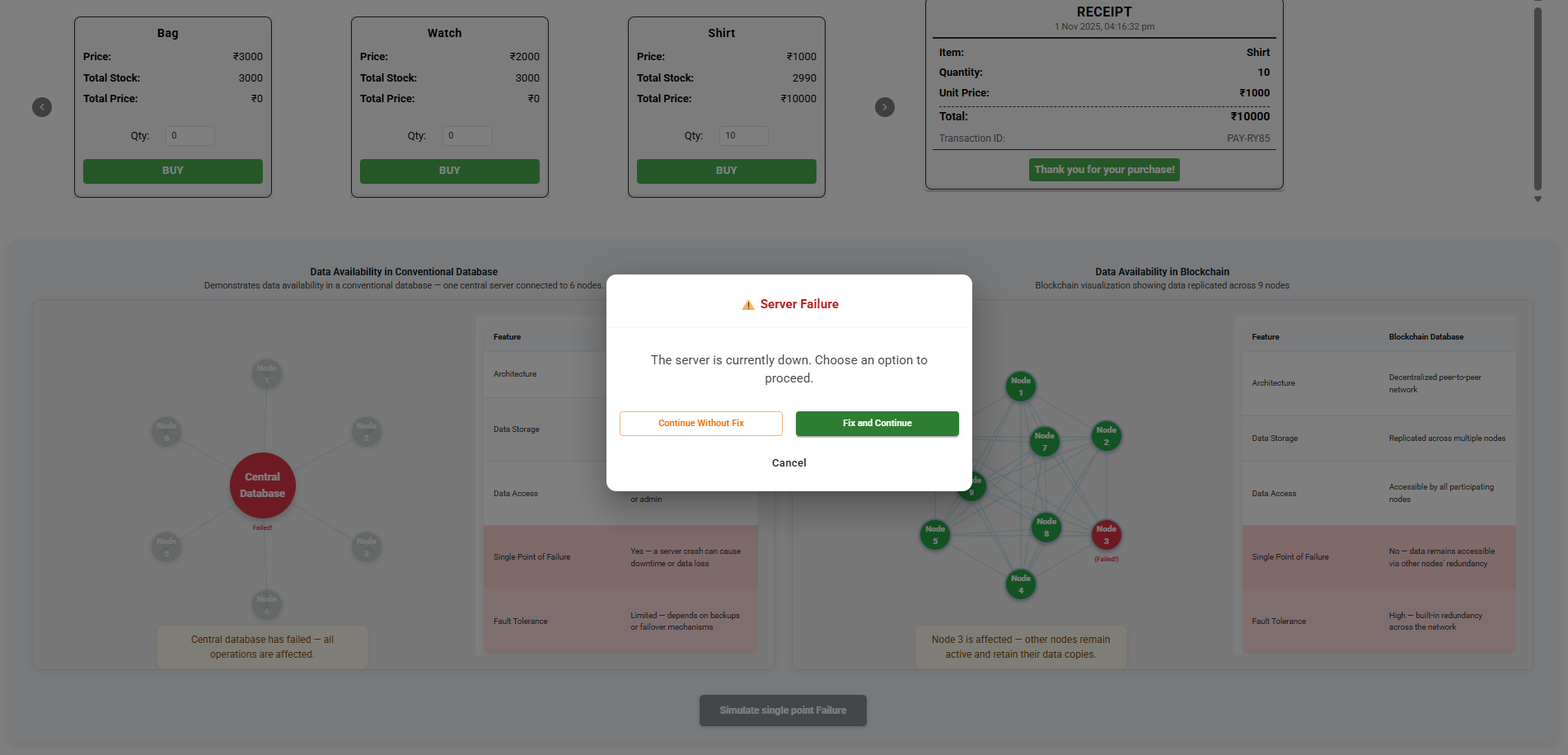
Fix and Continue – Repairs the failed server and restores normal operation. Continue Without Fix – Proceeds while the server remains down. In this case:
- In the Conventional Database, new transactions cannot be processed because the central server has failed.
- In the Blockchain Database, even if one node fails, other nodes remain active.
Performance
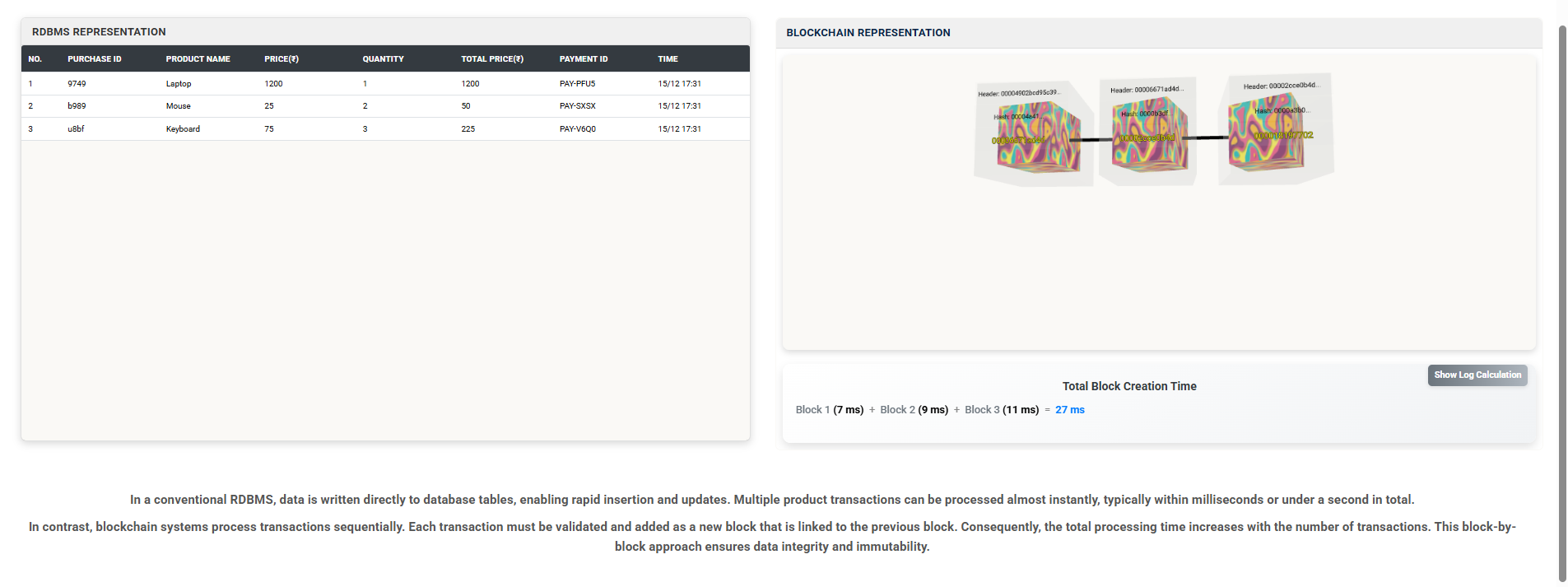
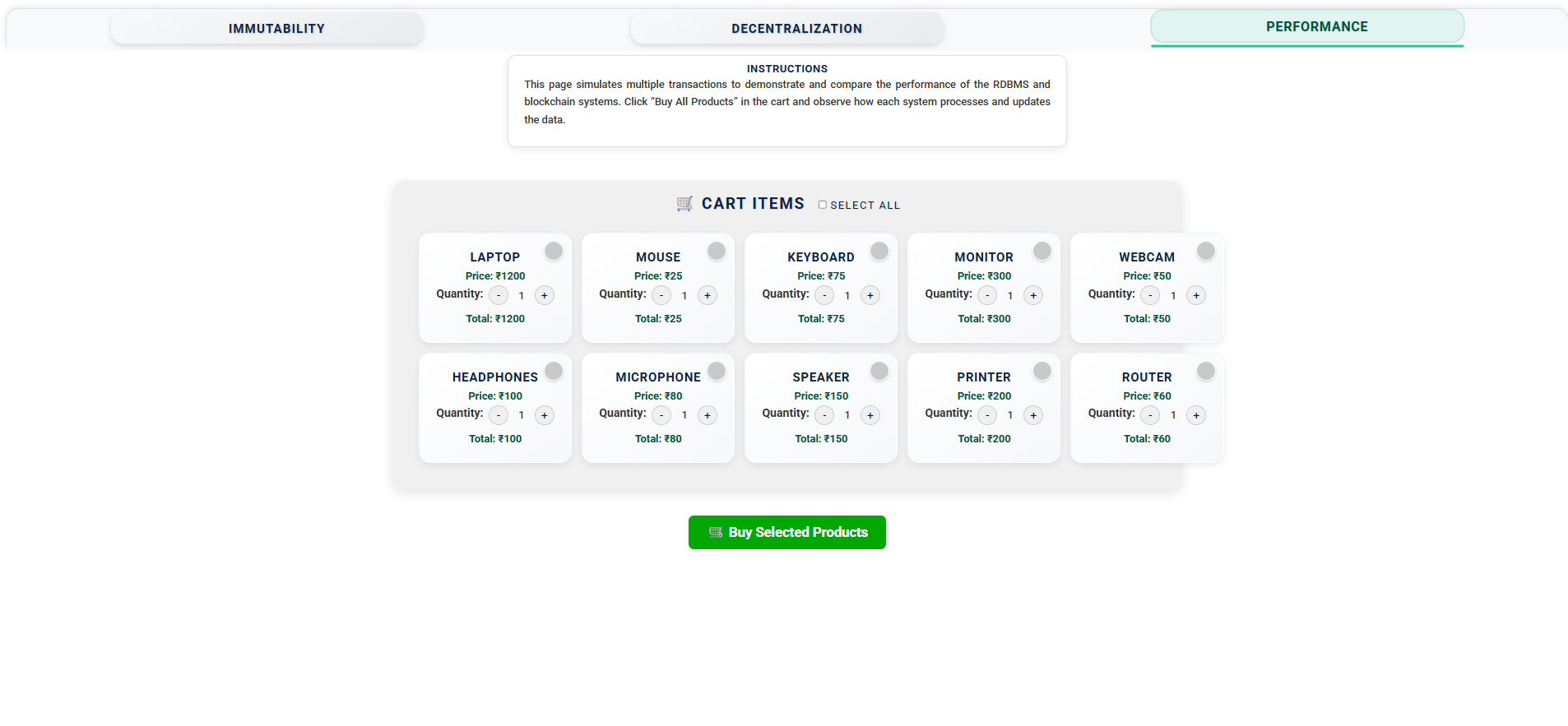
This page simulates multiple transactions to demonstrate and compare the performance of RDBMS and blockchain systems.
Select the required products (or use Select All) and click “Buy Selected Products” to observe how each system processes transactions and updates the data.
Observe the RDBMS Representation to see how transactions are updated instantly in a centralized table.
Observe the Blockchain Representation, where each transaction is processed sequentially and recorded as a new linked block, with the total time reflecting the sum of individual block creation times.